Loading...
Serving La Habra, CA and surrounding areas. (562) 245-5260
Precision La Habra Concrete works with Diamond Bar homeowners on slab foundation building, sloped driveway replacement, retaining walls, and concrete flatwork repair - using clay-soil base preparation suited to the city's foothill terrain and 1960s-to-1980s housing stock. We pull permits through the City of Diamond Bar Building and Safety Division and respond within 1 business day.
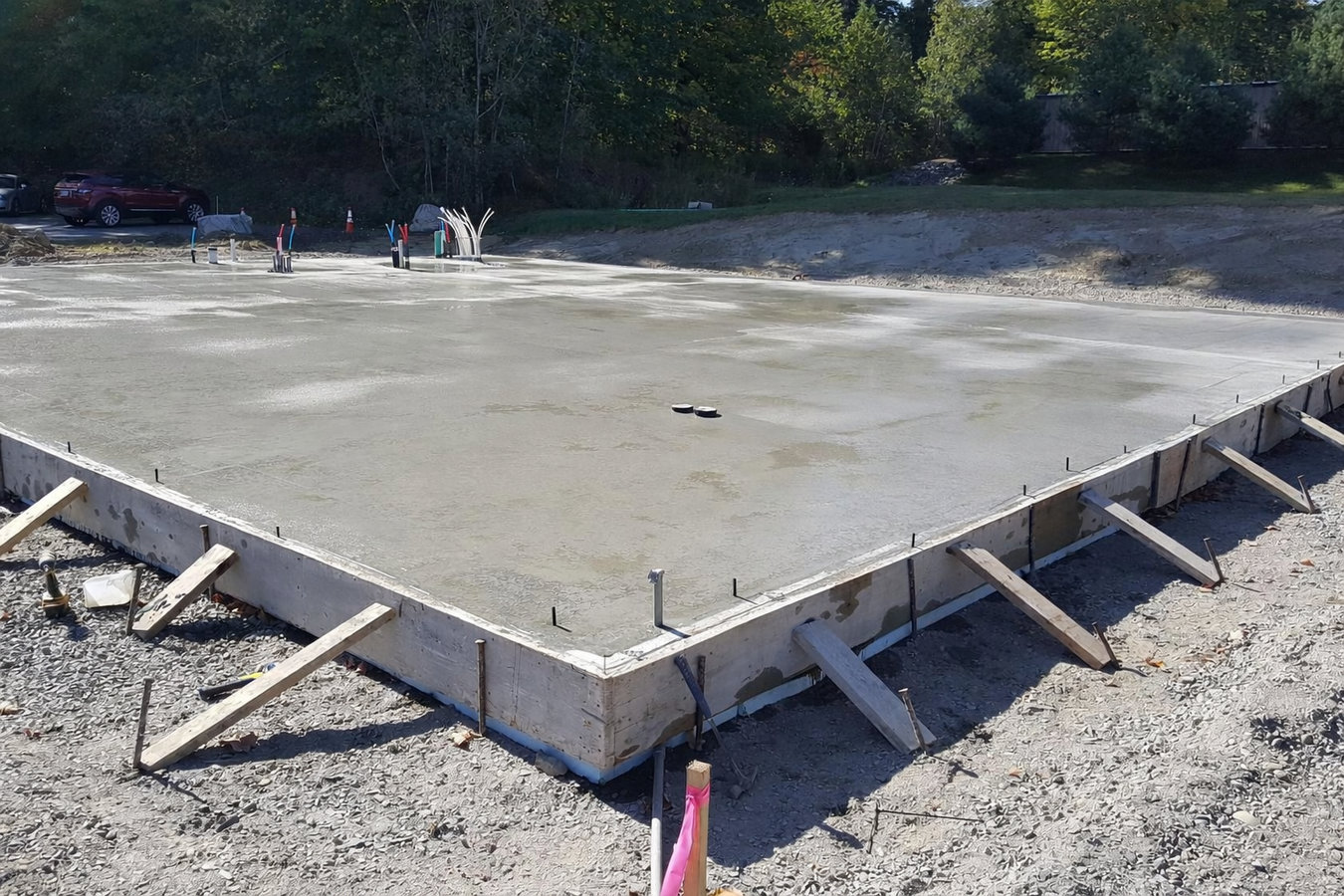
Diamond Bar is a predominantly single-family city where nearly 70 percent of households own their homes, and concrete slab foundations are the standard throughout its 1960s-to-1980s housing stock. On Diamond Bar hillside lots, slab foundations require careful attention to base preparation and footing depth to handle the grade changes and clay soil conditions that flat-lot slabs don't face. Read more about what slab foundation building involves on hillside terrain, including how compacted aggregate base layers and correct reinforcement protect slabs from seasonal soil movement.
Sloped driveways are the norm on Diamond Bar hillside lots, and they require more work than flat driveways to do correctly. Forming for grade, reinforcing against slope drainage that concentrates water at the base of the slab, and matching the elevation changes between the street and the garage all require hands-on assessment of the specific property. Driveways on Diamond Bar's foothill lots also absorb more stress from expansive clay soil movement than flat-lot slabs, so base preparation is not a step that can be shortened without shortening the slab's service life.
Retaining walls on Diamond Bar properties are structural elements, not decorative ones - they hold back the hillside that the home is built into, and when they fail, the consequences go well beyond cosmetic damage. Many retaining walls on Diamond Bar properties are original to construction in the 1970s or 1980s and are approaching or past their design life. A wall that is leaning, cracking through its face, or allowing water to seep through during rain is telling you the soil load behind it is winning.
Terraced yards and sloped entries on Diamond Bar properties mean steps are a practical necessity, not just a front-door feature. Steps built with shallow footings on hillside lots settle and tilt faster than on flat ground because the soil beneath them shifts with every rain-dry cycle. We build steps with footings sized to resist that movement and with treads pitched correctly to drain water off the surface rather than let it pond and accelerate deterioration.
Terraced rear yards on Diamond Bar hillside lots can be excellent outdoor living spaces, but the original concrete patios on homes built in the 1970s and 1980s are now cracked and uneven from decades of clay soil movement. A replacement patio poured with proper drainage slope and a compacted base eliminates the trip hazards and standing water problems that aging slabs on sloped lots develop. Diamond Bar homeowners with equity in the $750,000-to-$800,000 range benefit directly from outdoor improvements that extend usable living space.
Adding a room, a covered patio, or a detached structure on a Diamond Bar hillside property starts with footings that can handle the slope and the underlying clay soils. Footings undersized for the load or set too shallow in expansive soil will shift as the soil moves through wet and dry seasons, taking whatever structure sits above them. We assess the bearing capacity of the soil at the actual site before specifying footing dimensions, which is the only way to get it right on Diamond Bar terrain.
Diamond Bar is a hillside city, and that one fact explains most of what makes concrete work here different from the flat cities in the surrounding San Gabriel Valley. The city sits in the Pomona Valley foothills at the eastern edge of Los Angeles County, and most of its residential lots have some degree of slope - many have significant grade changes with retaining walls, terraced yards, and driveways that descend from the street to a garage set below grade or climb to a garage set above. Homes here were built primarily between the late 1960s and the 1980s, which means the original concrete on most properties is now 40 to 60 years old. That age alone would be enough to justify replacement on many properties, but the combination of age, hillside stress, and expansive clay soils makes it genuinely urgent on a significant share of Diamond Bar homes.
The clay soils that underlie much of Diamond Bar's foothill terrain are classified as having high expansive potential by the U.S. Geological Survey. These soils absorb water during winter rains and swell, then lose that water in the dry summer and shrink - a cycle that puts stress on anything sitting on top of them. On a flat lot, that stress is distributed evenly across a slab. On a sloped lot, it concentrates at the uphill edge and at drainage points, accelerating cracking in exactly the spots where water is most likely to get in and freeze-thaw cycles won't help. Proper concrete work in Diamond Bar always starts with addressing the soil, not just replacing the slab.
We pull permits for Diamond Bar concrete work through the City of Diamond Bar Building and Safety Division. Retaining walls above a certain height and concrete work tied to foundations require engineering review in Diamond Bar, and we account for that process in every project estimate and schedule.
Diamond Bar sits along the 57 and 60 freeways at the far eastern edge of Los Angeles County, right on the border with San Bernardino County. The city is compact - roughly 15 square miles - and nearly all of it is residential. The streets wind through the foothills, and most neighborhoods are named after the terrain: neighborhoods near Summitridge Park and Diamond Bar High School represent the community character residents identify with. The homes along Grand Avenue and the neighborhoods off Diamond Bar Boulevard are the properties we work on most often - ranch and traditional styles from the 1970s and 1980s, many with stucco exteriors, two-car garages, and concrete that has been through several decades of clay soil movement.
Our crew also serves homeowners in nearby Norwalk to the west, where flat-lot conditions and postwar housing stock present a contrast to Diamond Bar's hillside terrain. For projects near the San Bernardino County border and the Pomona area, we are a practical choice given our regular presence along the 57 and 60 freeway corridor.
Call (562) 245-5260 or submit a request online. We respond to every Diamond Bar inquiry within 1 business day to schedule your free on-site assessment at a time that works for you.
We walk the Diamond Bar property, assess soil conditions, grade, existing slab damage, and drainage. Hillside properties often reveal factors - drainage concentration points, retaining wall conditions, slope reinforcement needs - that cannot be evaluated from photos. You receive a written itemized estimate with no obligation. This is also where we identify whether permits are required.
For permitted work, we submit to the City of Diamond Bar and schedule your start date once approval is confirmed. Demo, base prep, forming, and the pour are sequenced efficiently so your driveway or slab is not left partially demolished during the permit window.
We walk through the finished work with you before the crew leaves. You get clear curing timelines - 24 to 48 hours for foot traffic, 7 days before vehicles - and specific guidance for Diamond Bar's summer heat, when wet curing prevents early surface cracking.
We serve all of Diamond Bar, from the hillside neighborhoods near Summitridge Park to the homes along the 57 and 60 freeway corridors. Written estimates, no pressure, no obligation.
(562) 245-5260Diamond Bar is a planned hillside community in eastern Los Angeles County, incorporated as a city in 1989 after several decades of residential development that began in the late 1960s. Before that development, the land was cattle ranch country, and the city's name comes from a cattle brand used by the original Rancho Los Nogales property. Most of the city's approximately 55,000 residents live in single-family homes, and the homeownership rate of around 70 percent is well above the California average. Median home values sit in the $750,000-to-$800,000 range, reflecting the city's reputation for well-maintained neighborhoods, strong schools including Diamond Bar High School, and its position as a desirable suburb between Los Angeles and the Inland Empire.
The city is built into the Pomona Valley foothills, and landmarks like Summitridge Park and the Diamond Bar Center reflect the community character of a city that organizes its public life around parks and gathering spaces rather than commercial corridors. The 57 and 60 freeways run through the city and connect it to Pomona, Walnut, and the broader San Gabriel Valley. Diamond Bar borders Walnut to the north, Pomona to the east, and Rowland Heights and Brea to the west and south. Our work in Diamond Bar connects naturally to Norwalk along the Los Angeles County interior, and to the broader foothill corridor where hillside lot conditions shape the kind of concrete work every property needs.
Durable concrete driveways designed and poured to last for decades.
Learn moreCustom concrete patios that extend your outdoor living space beautifully.
Learn moreDecorative stamped concrete that mimics stone, brick, or tile at a fraction of the cost.
Learn moreSafe, ADA-compliant concrete sidewalks built to local code and specifications.
Learn moreSmooth, resilient garage floor concrete finishes that stand up to heavy use.
Learn moreEye-catching decorative concrete surfaces that elevate curb appeal and interior spaces.
Learn moreStructurally sound concrete retaining walls that control erosion and grade changes.
Learn morePrecision concrete floor installations for residential and commercial properties.
Learn moreSlip-resistant, heat-reflective concrete pool decks perfect for the Southern California climate.
Learn moreSolid concrete steps and staircases built for safety and lasting curb appeal.
Learn moreProperly engineered concrete slab foundations for new construction projects.
Learn moreExpert foundation installation services that give your structure a stable base.
Learn moreHeavy-duty concrete parking lots designed for high traffic and long service life.
Learn moreAccurately placed concrete footings that distribute structural loads safely.
Learn moreFoundation raising and leveling to restore structural integrity and safety.
Learn morePrecise concrete cutting and sawing for modifications, repairs, and new openings.
Learn moreServing these cities and communities.
Clay soils and sloped lots make winter the hardest season on Diamond Bar concrete. A free on-site assessment now costs nothing - waiting for a retaining wall or slab to fail costs a lot more.